
Gallbladder Diet Menu Plan: 7-Day Guide to Foods & Meals
If you’re dealing with gallbladder problems or recovering from surgery, creating the right meal plan can feel overwhelming when doctors simply tell you to “eat low-fat foods.” A gallbladder diet menu plan focuses on low-fat, high-fibre meals that are gentle on your digestive system whilst still providing proper nutrition and flavour.
Your gallbladder plays a crucial role in digesting fats by storing and releasing bile, but when it’s not working properly, certain foods can trigger pain, bloating, and other uncomfortable symptoms. Understanding which foods support your digestive health and which ones to avoid becomes essential for managing your condition effectively.
Rachel's Recipe Pantry contains affiliate links and is a member of the Amazon Services LLC Associates Program. If you make a purchase using one of these Amazon links, we may receive compensation at no extra cost to you. See our Disclosure Policy for more information.
This guide will walk you through the science behind gallbladder function, explain why dietary changes matter, and provide you with a complete 7-day menu plan filled with practical meal ideas. You’ll also discover specific foods that help reduce symptoms, learn what ingredients to eliminate from your kitchen, and get answers to common questions about managing your diet during gallbladder issues.
Table of contents
- Understanding the Gallbladder and Its Role in Digestion
- Gallbladder Problems and Dietary Needs
- Principles of a Gallbladder Diet Menu Plan
- Foods to Include in a Gallbladder Diet
- Foods and Ingredients to Avoid
- Sample 7-Day Gallbladder Diet Menu Plan
- Additional Tips for Supporting Gallbladder Health
- Frequently Asked Questions
Understanding the Gallbladder and Its Role in Digestion
The gallbladder is a small, pear-shaped organ that stores bile and releases it when you eat fatty foods. This process helps your digestive system break down and absorb fats properly.
Gallbladder Function and Anatomy
Your gallbladder sits just beneath your liver on the right side of your abdomen. It measures about 7-10 centimetres long and holds roughly 30-50 millilitres of bile.
The organ has a simple but important job. It stores bile that your liver makes and concentrates it by removing water. This makes the bile stronger and more effective at breaking down fats.
When you eat foods containing fat, your gallbladder contracts. This squeezes the concentrated bile through a tube called the bile duct. The bile then travels into your small intestine where it helps digest the fatty food you just ate.
Your gallbladder works automatically. You don’t need to think about it contracting or releasing bile. Hormones in your body signal when it’s time to release bile based on what you eat.
Bile Production and Flow
Your liver produces bile continuously throughout the day. It makes about 500-1000 millilitres of bile every 24 hours. This yellow-green fluid contains bile salts, cholesterol, and other substances that help break down fats.
The bile flow process works like this:
- Liver produces bile
- Bile travels through small ducts to the bile duct
- Some bile goes straight to your small intestine
- Extra bile gets stored in your gallbladder
When bile flow gets blocked by gallstones or inflammation, you may feel pain. This happens because bile builds up and can’t flow properly to help with digestion.
The bile salts in bile work like soap. They break large fat particles into smaller ones that your body can absorb more easily.
Relationship with the Liver and Digestive System
Your gallbladder and liver work as a team in your digestive system. The liver makes bile, whilst the gallbladder stores and releases it when needed.
This partnership is essential for proper fat digestion. Without enough bile, your body struggles to absorb fat-soluble vitamins like A, D, E, and K. You might also feel bloated or uncomfortable after eating fatty foods.
Your gallbladder responds to signals from your digestive system. When food enters your small intestine, hormones tell your gallbladder to contract and release bile.
The timing matters. Your gallbladder releases the most bile about 30-60 minutes after you eat. This matches when your food reaches the part of your small intestine where fat digestion happens.
If your gallbladder isn’t working properly, your digestive system must rely only on the bile your liver sends directly to your intestine. This smaller amount of bile may not be enough to handle fatty meals effectively.
Gallbladder Problems and Dietary Needs
Gallbladder disease affects millions of people and creates specific dietary challenges that require careful attention to food choices. Understanding how different conditions impact digestion helps you make better decisions about what to eat and avoid.
Common Gallbladder Diseases and Symptoms
Gallstones are the most common gallbladder problem. These hard deposits form inside your gallbladder when bile contains too much cholesterol or bilirubin.
Cholecystitis happens when your gallbladder becomes inflamed. This often occurs when gallstones block the tubes that carry bile from your gallbladder.
Biliary dyskinesia affects how well your gallbladder empties. Your gallbladder doesn’t squeeze properly to release bile.
The main symptoms include:
- Sharp abdominal pain in your upper right side
- Pain that spreads to your back or right shoulder
- Nausea and vomiting
- Bloating and gas after eating
- Fever (with cholecystitis)
Pain often gets worse after eating fatty or greasy foods. Some people feel sick for several hours after meals.
Gallstones and Gallstone Formation
Gallstone formation happens when substances in bile become unbalanced. There are two main types of gallstones.
Cholesterol stones make up about 80% of all gallstones. They form when your bile contains too much cholesterol and not enough bile salts to dissolve it.
Pigment stones are smaller and darker. They form when bile contains too much bilirubin, often in people with liver disease or blood disorders.
Several factors increase your risk of developing gallstones:
- Being female (especially during pregnancy) – this happened to me!
- Age over 40
- Being overweight or obese
- Rapid weight loss
- Family history of gallbladder problems
- Diabetes
Your diet plays a major role in gallstone formation. Eating too much saturated fat and refined sugar increases your risk.
Impact of Diet on Gallbladder Health
Dietary choices directly affect how well your gallbladder works. High-fat foods trigger your gallbladder to release bile quickly, which can cause pain if you have gallstones.
Foods that commonly trigger symptoms include:
- Fried foods and fast food
- Full-fat dairy products
- Fatty cuts of meat
- Processed foods with trans fats
- Rich desserts and pastries
Low-fat foods are easier for your gallbladder to handle. Your body needs less bile to digest them, reducing the chance of painful episodes.
Eating smaller, more frequent meals also helps. Large meals force your gallbladder to work harder, which can trigger symptoms.
High-fibre foods support gallbladder health by helping your body process fats more efficiently. They also help maintain healthy cholesterol levels in your bile.
People without gallbladder problems should still pay attention to these dietary factors. Prevention is much easier than treatment once gallbladder disease develops.
Principles of a Gallbladder Diet Menu Plan
A gallbladder diet focuses on reducing fat intake whilst increasing fibre to support digestive health. Proper meal timing and adequate hydration work together to create an effective eating plan that minimises symptoms and promotes healing.
Low-Fat and High-Fibre Focus
Fat restriction forms the cornerstone of any gallbladder diet. You should limit fat intake to 30 grams or less per day during acute symptoms.
This low-fat diet helps reduce the workload on your gallbladder. When you eat high-fat foods, your gallbladder contracts to release bile, which can trigger painful attacks.
Foods to avoid include:
- Fried foods and takeaways
- Full-fat dairy products
- Fatty cuts of meat
- Processed foods and biscuits
- Creamy sauces and dressings
High-fibre foods support your digestive health and help maintain a balanced diet. Aim for 25-30 grams of fibre daily from whole grains, fruits, and vegetables.
Soluble fibre helps bind bile acids and may reduce gallstone formation. Good sources include oats, apples, and beans.
Recommended Meal Frequency
Small, frequent meals work better than large portions for gallbladder health. Eat 4-6 smaller meals throughout the day rather than three large ones.
This approach prevents overwhelming your digestive system. Large meals require more bile production, which can strain your gallbladder and trigger symptoms.
Portion control guidelines:
- Keep meals under 3 grams of fat each
- Fill half your plate with vegetables
- Limit protein portions to palm-size
- Choose whole grain carbohydrates
Eating at regular intervals helps maintain steady bile flow. This prevents bile from becoming concentrated in your gallbladder, reducing the risk of stone formation.
Hydration and Fluid Intake
Adequate hydration supports bile production and helps prevent gallstones. Drink at least 8-10 glasses of water daily to maintain proper digestive health.
Water helps thin bile, making it less likely to form stones. Dehydration can concentrate bile, increasing your risk of complications.
Best fluid choices include:
- Plain water
- Herbal teas
- Diluted fruit juices
- Clear broths
Limit caffeinated drinks as they may trigger symptoms in some people. Avoid sugary drinks and alcohol, which can worsen gallbladder inflammation and interfere with your balanced diet goals.
Foods to Include in a Gallbladder Diet
A gallbladder-friendly diet focuses on foods that are easy to digest and low in fat. The best choices include whole grains that provide steady energy, fresh fruits and vegetables for essential nutrients, and lean proteins that won’t strain your digestive system.
Whole Grains and Complex Carbohydrates
Whole grains form the foundation of your gallbladder diet. They provide fibre and nutrients without adding fat that could trigger symptoms.
Oats are particularly beneficial for breakfast. Steel-cut oats offer more fibre than instant varieties. You can add cinnamon or fresh berries for flavour without fat.
Brown rice serves as an excellent base for meals. It digests more easily than white rice whilst providing B vitamins and minerals.
Quinoa contains complete proteins and cooks quickly. Try it in quinoa salad with herbs and vegetables for a filling lunch.
Other good options include:
- Whole wheat bread
- Whole grain pasta
- Barley
- Bulgur wheat
Choose plain varieties without added butter or oil. Season with herbs and spices instead of fatty sauces.
Fruits and Vegetables
Fresh fruits and vegetables provide essential vitamins and antioxidants. Most are naturally low in fat and high in fibre.
Broccoli and other cruciferous vegetables work well steamed or boiled. Raw vegetables may be harder to digest during flare-ups.
Sweet potatoes offer beta-carotene and natural sweetness. Bake them with herbs rather than butter.
Celery makes an excellent snack food. Pair it with fat-free hummus for added protein.
Recommended fruits include:
- Apples
- Berries
- Bananas
- Citrus fruits
- Pears
Steamed vegetables and boiled vegetables are gentler on your system than raw ones. Try carrots, green beans, and courgettes.
Air-popped popcorn provides a satisfying snack without added fats. Avoid buttered varieties.
Consider a smoothie with spinach for breakfast. Blend with banana and fat-free yoghurt for nutrients.
Lean Proteins and Plant-Based Options
Protein is essential, but choose low-fat sources that won’t trigger gallbladder symptoms.
White fish like cod and haddock are excellent choices. They’re naturally low in fat and easy to digest.
Some salmon, sardines, and tuna contain healthy omega-3 fats. Start with small portions to test your tolerance.
Skinless chicken breast and turkey breast provide lean protein. Remove all visible fat before cooking.
Egg whites and scrambled egg whites offer protein without the fat found in yolks. They work well for breakfast or light meals.
Plant-based options include:
- Lentils in soups and curries
- Chickpeas for protein and fibre
- Beans in various dishes
- Greek yoghurt (fat-free varieties)
Lentil soup makes a satisfying meal. Cook with vegetables and herbs for added flavour.
These proteins support your low-fat diet whilst providing essential amino acids for healing and energy.
Foods and Ingredients to Avoid
Certain foods can trigger gallbladder pain and worsen symptoms by making your digestive system work harder. High-fat items, processed foods, and specific beverages are the main culprits you need to eliminate or severely limit.
High-Fat and Fried Foods
Fried foods are your gallbladder’s worst enemy. When you eat chips, fried chicken, or doughnuts, your body struggles to produce enough bile to break down these fats.
This creates painful episodes and digestive discomfort. High-fat foods containing more than 3 grams of fat per serving should be avoided completely during flare-ups.
Saturated fats and trans fats are particularly problematic. These include:
- Deep-fried items (chips, onion rings, fried fish)
- Butter and margarine
- Fatty cooking oils when used for frying
- Pastries and croissants
Trans fats found in many commercial baked goods can worsen inflammation. Always check food labels for “partially hydrogenated oils” and avoid these products entirely.
Processed Foods and Added Sugars
Processed foods often contain hidden fats and additives that strain your gallbladder. Fast food meals typically combine multiple problem ingredients in one sitting.
Cookies, cakes, and biscuits contain both high fat content and refined sugars. These create a double burden on your digestive system.
Avoid these processed items:
- Pre-packaged meals
- Commercial baked goods
- Sweets and chocolate
- Fizzy drinks with high sugar content
Sugar itself doesn’t directly harm the gallbladder, but it often comes paired with fats in processed foods. This combination makes symptoms worse and should be eliminated from your diet.
Problematic Dairy and Meats
Full-fat dairy products are major triggers for gallbladder pain. Whole milk, cheese, and cream contain high levels of saturated fat that your body cannot process properly.
Parmesan and aged cheeses are particularly high in fat. Even small amounts can cause symptoms in sensitive individuals.
Fatty cuts of meat pose similar problems. Ribs, bacon, and sausage contain excessive saturated fat and should be completely avoided.
Problem proteins include:
- Ribs and pork belly
- Sausage and salami
- Lamb and beef with visible fat
- Processed meats like pepperoni
Choose lean alternatives instead. Remove all visible fat from meat before cooking and avoid processed meat products entirely.
Beverages and Miscellaneous Triggers
Alcohol can worsen gallbladder inflammation and interfere with bile production. Beer, wine, and spirits all pose risks during active symptoms.
Coffee affects some people negatively, though others tolerate it well. Monitor your body’s response and limit intake if symptoms worsen.
Other problematic items include:
- Creamy sauces and salad dressings
- Coconut and coconut oil
- Nuts and seeds (in large quantities)
- Spicy foods and hot sauces
Fizzy drinks can increase bloating and discomfort. Water, herbal teas, and diluted fruit juices are better choices for staying hydrated whilst managing symptoms.
Sample 7-Day Gallbladder Diet Menu Plan
This comprehensive menu plan provides specific meal options that support gallbladder health through low-fat, easily digestible foods. The plan includes adaptable recipes and snack alternatives to meet various dietary requirements whilst maintaining nutritional balance.
Daily Structure and Meal Examples
Day 1
- Breakfast: Scrambled egg whites with whole grain toast and fresh strawberries
- Lunch: Clear chicken broth with steamed vegetables and brown rice
- Dinner: Baked chicken breast (skinless) with roasted sweet potato
- Snacks: Rice cakes with fat-free cottage cheese
Day 2
- Breakfast: Porridge made with skimmed milk and blueberries
- Lunch: Quinoa salad with cucumber, tomatoes, and lemon dressing
- Dinner: Grilled white fish with steamed broccoli and mashed potato (no butter)
- Snacks: Natural yogurt (fat-free) with berries
Day 3
- Breakfast: Smoothie with banana, berries, and almond milk (unsweetened)
- Lunch: Turkey breast sandwich on wholemeal bread with lettuce
- Dinner: Vegetable stir-fry with tofu and brown rice
- Snacks: Apple slices with plain rice cakes
Each day includes three balanced meals plus two snacks. Portion sizes should remain moderate to avoid overwhelming your digestive system. Drink plenty of water throughout the day to aid digestion.
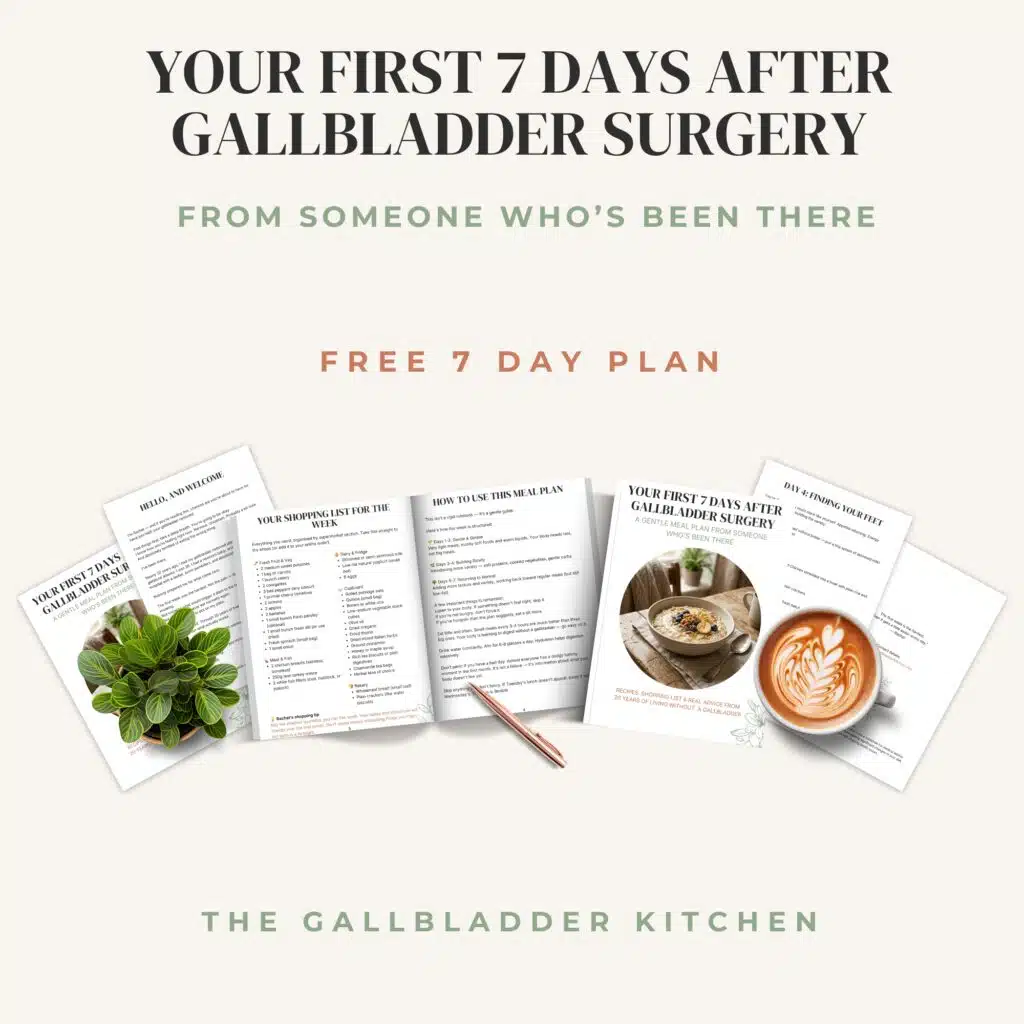
Day 4, 5, 6 and 7 mix and match with the snack options below. For a complete 28 day meal plan with recipes try my Gallbladder Meal Plan to download now from my other site The Gallbladder Kitchen.
Gallbladder-Friendly Snacks and Substitutions
Safe Snack Options:
- Whole grain crackers with low-fat hummus
- Rice cakes topped with mashed banana
- Fat-free yogurt with cinnamon
- Steamed vegetables with herbs
- Fresh fruit (excluding high-fat options)
Smart Substitutions: Replace butter with small amounts of olive oil for cooking. Use egg whites instead of whole eggs. Choose skimmed milk over full-fat versions.
Swap creamy dressings for lemon juice and herbs. Replace fried foods with baked or grilled alternatives. Use fat-free sour cream instead of regular versions.
Foods to Limit: Avoid nuts and avocados during acute phases, though small amounts may be tolerated later. Skip high-fat dairy products and processed meats. Eliminate fried and greasy foods completely.
Adapting the Plan for Special Dietary Needs
Vegetarian Modifications: Replace meat proteins with lentils, chickpeas, and tofu. Include quinoa and brown rice as protein sources. Add steamed vegetables and leafy greens for nutrients.
Use plant-based milk alternatives like almond milk (unsweetened). Include beans and pulses for fibre and protein. Ensure adequate iron intake through spinach and fortified cereals.
Gluten-Free Adaptations: Substitute wheat products with rice cakes and gluten-free oats. Use quinoa instead of wheat-based grains. Choose certified gluten-free bread and crackers.
Replace regular pasta with rice noodles or quinoa pasta. Check all processed foods for hidden gluten. Include naturally gluten-free grains like millet and buckwheat.
Portion Adjustments: Start with smaller portions and increase gradually as tolerated. Eat frequent, smaller meals rather than three large ones. Monitor your body’s response to different foods and adjust accordingly.
Additional Tips for Supporting Gallbladder Health
Proper cooking methods and natural remedies can further support your gallbladder health alongside a well-planned diet. Working with a registered dietitian ensures you get personalised guidance for your specific needs.
Healthy Cooking Methods
The way you prepare food matters as much as what you eat. Choose cooking methods that reduce fat content whilst preserving nutrients.
Steaming is one of the best options for vegetables and fish. It keeps food moist without adding oils or fats. Steam broccoli, carrots, or white fish for gentle, digestive-friendly meals.
Grilling allows excess fat to drip away from meat. Use a grill rack to keep food elevated. This method works well for chicken breast and lean cuts of fish.
Baking requires minimal added fats. Line baking trays with parchment paper instead of greasing with butter. You can bake vegetables with a light spray of olive oil.
Poaching in water or low-sodium broth creates tender results. This method suits eggs, chicken, and delicate fish perfectly.
Avoid deep frying, which adds unnecessary fats that can trigger gallbladder attacks. Pan-frying in heavy oils also puts extra strain on your digestive system.
Herbs, Spices and Natural Remedies
Natural ingredients can support digestive health and reduce inflammation without overwhelming your gallbladder.
Turmeric contains anti-inflammatory compounds that may help reduce gallbladder inflammation. Add a pinch to soups or mix into rice dishes. Start with small amounts as it can be quite potent.
Ginger aids digestion and can help reduce bloating and gas. Fresh ginger root works best when grated into teas or stir-fries. Dried ginger powder offers convenience for cooking.
Lemon juice may help dissolve cholesterol in bile. Squeeze fresh lemon into water each morning. The citric acid supports overall digestive health.
Garlic provides digestive benefits and may help lower cholesterol levels. Use fresh garlic cloves in cooking rather than processed garlic products.
Olive oil in small amounts provides healthy fats that support bile production. Use extra virgin olive oil for dressings or light cooking.
These natural remedies work best as part of a balanced diet, not as standalone treatments.
When to Consult a Registered Dietitian
A registered dietitian can create a personalised plan that fits your lifestyle and medical needs. They understand how different foods affect bile salts and digestive health.
Seek professional help if you experience frequent gallbladder attacks despite dietary changes. A dietitian can identify trigger foods you might have missed.
Complex medical conditions require expert guidance. If you have diabetes, heart disease, or other health issues alongside gallbladder problems, professional support becomes essential.
Meal planning struggles indicate you might benefit from structured guidance. A registered dietitian can create practical meal plans that reduce preparation stress.
Nutritional concerns about getting enough nutrients on a restricted diet need addressing. They ensure you maintain proper nutrition whilst avoiding trigger foods.
Long-term maintenance becomes easier with professional support. A dietitian helps you transition from strict dietary restrictions to sustainable eating patterns.
Contact a registered dietitian through your GP surgery or find one through the British Dietetic Association. Many offer both in-person and online consultations.
Frequently Asked Questions
Following a gallbladder diet requires understanding which foods support healing and which portion sizes work best for your digestive system. These common questions address the most important dietary choices for gallbladder health.
What are the best foods to include in a diet after gallbladder removal?
Lean proteins form the foundation of your post-surgery diet. Choose skinless chicken, turkey, white fish like cod or haddock, and egg whites. These options provide essential nutrients without overwhelming your digestive system.
Whole grains help stabilise your digestion. Include oats, brown rice, quinoa, and barley in your meals. These foods provide steady energy and support healthy bowel movements.
Fresh fruits and vegetables should make up a large portion of your plate. Apples, bananas, berries, carrots, broccoli, and leafy greens are gentle on your system. They provide vitamins and minerals your body needs to heal.
Low-fat dairy products can be included in moderation. Choose skimmed milk, low-fat yoghurt, and cottage cheese. These foods provide calcium and protein without excess fat.
Are there any specific types of fat that should be avoided for individuals without a gallbladder?
Saturated fats cause the most digestive problems after gallbladder removal. Avoid fatty cuts of meat like beef ribs, pork belly, and lamb. These foods are difficult to digest without bile storage.
Fried foods should be completely eliminated from your diet. Chips, fried chicken, and battered fish can trigger severe digestive symptoms. The high fat content overwhelms your system’s ability to process them.
Full-fat dairy products often cause discomfort. Avoid whole milk, cream, butter, and aged cheeses. These foods contain concentrated fats that your body cannot handle efficiently.
Processed and packaged foods frequently contain hidden saturated fats. Read labels carefully and avoid items with hydrogenated oils or trans fats. These ingredients can worsen digestive symptoms.
Can you provide a list of high-fibre foods that are beneficial for someone following a gallbladder diet?
Soluble fibre foods help regulate your digestion and prevent constipation. Oats, barley, and beans are excellent sources. Start with small portions to allow your system to adjust.
Fresh fruits provide natural fibre and essential nutrients. Apples with skin, pears, berries, and oranges support healthy bowel movements. Eat them throughout the day in small portions.
Vegetables offer both soluble and insoluble fibre. Broccoli, carrots, sweet potatoes, and Brussels sprouts are particularly beneficial. Steam or roast them with minimal oil for best results.
Legumes provide protein and fibre together. Lentils, chickpeas, and black beans can replace meat in some meals. Cook them thoroughly and start with small servings to avoid digestive upset.
Whole grain products support digestive health. Brown rice, quinoa, whole wheat pasta, and wholemeal bread provide steady energy. Choose these over refined grains whenever possible.
What are the recommended portion sizes for meals to minimise discomfort after gallbladder surgery?
Small, frequent meals work better than large portions. Eat every three to four hours throughout the day. This approach prevents overwhelming your digestive system with too much food at once.
Protein portions should be about the size of your palm. This equals roughly 85-115 grams of cooked meat, fish, or poultry. Smaller protein portions are easier for your body to process.
Vegetable servings can be more generous. Aim for half your plate to contain non-starchy vegetables. Steamed, roasted, or raw vegetables provide nutrients without excess calories or fat.
Grain portions should fit in a cupped hand. This equals about 125-185 grams of cooked rice, pasta, or quinoa. These carbohydrates provide energy without straining your digestion.
Fat portions must be carefully controlled. Use no more than one teaspoon of healthy oils per meal. This small amount provides flavour without causing digestive problems.
How should someone with gallbladder issues alter their diet to prevent gallstone formation?
Regular meal timing prevents bile from becoming concentrated. Eat at consistent times each day and never skip meals. Long gaps between eating can increase gallstone risk.
Gradual weight loss protects against gallstone formation. Lose no more than 0.5-1 kilogram per week if you need to reduce weight. Rapid weight loss increases gallstone development.
Adequate water intake keeps bile flowing properly. Drink at least eight glasses of water daily. Proper hydration prevents bile from becoming thick and forming stones.
Limit refined sugars and processed carbohydrates. These foods can increase gallstone risk when consumed regularly. Choose whole foods over packaged snacks and sweets.
Include moderate amounts of healthy fats in your diet. Small portions of olive oil, nuts, and seeds may actually help prevent gallstones. Completely fat-free diets can worsen gallbladder problems.
Could you suggest a typical meal plan for a week that supports gallbladder health?
Monday might include porridge with berries for breakfast, grilled chicken salad for lunch, and baked cod with steamed vegetables for dinner. Keep snacks simple with fruit or low-fat yoghurt.
Tuesday could feature egg white scramble for breakfast, lentil soup with wholemeal toast for lunch, and turkey meatballs with brown rice for dinner. Drink plenty of water between meals.
Wednesday meals might include smoothie with banana and skimmed milk, quinoa salad with vegetables, and grilled fish with sweet potato. Choose herbal teas over caffeinated drinks.
Thursday options include oatmeal with sliced apple, chicken and vegetable soup, and baked chicken breast with steamed broccoli. Space meals three to four hours apart.
Friday could feature low-fat yoghurt with berries, turkey wrap with vegetables, and white fish with roasted vegetables. Avoid adding butter or heavy sauces to your meals.
Weekend meals can include similar combinations whilst maintaining the same principles. Focus on lean proteins, whole grains, and plenty of vegetables. Keep portion sizes moderate and eat regularly throughout each day.