
Bean To Cup Coffee Machine Review
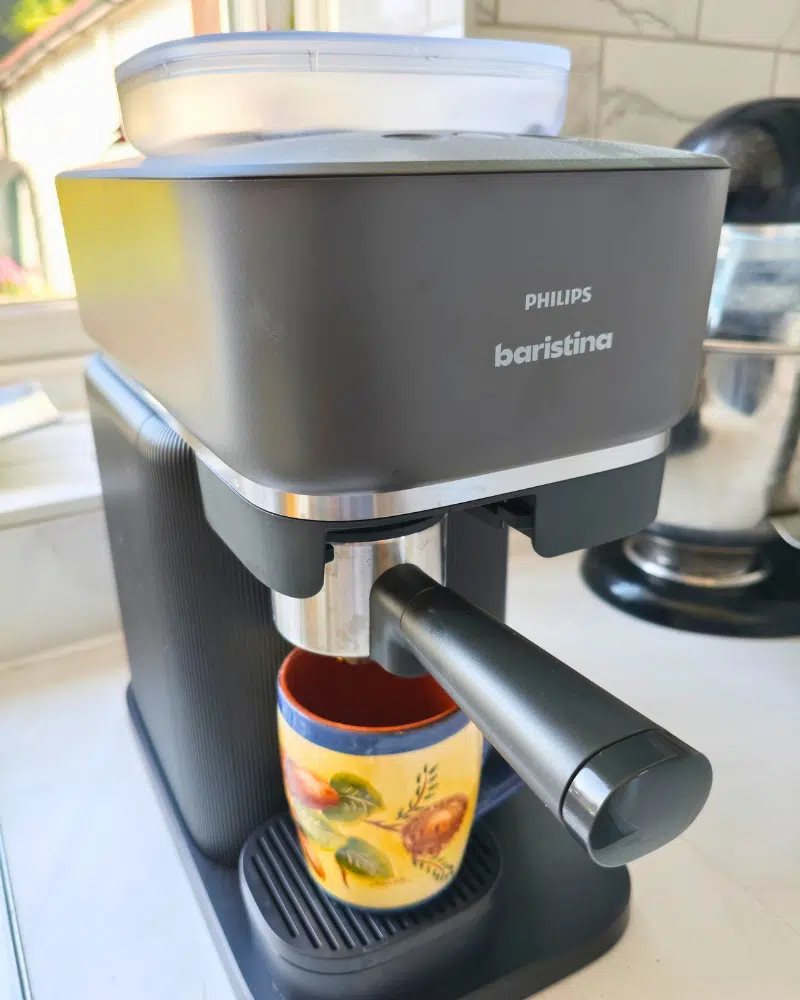
My husband and I have always using bought ground coffee to go in our cafetiere which we love to drink every morning with our breakfast. We also add a spoonful of cacao powder to it for a hint of chocolate and it also takes that bitter edginess away. Recently I got to try a bean to cup espresso machine which I’ve always wanted to try but was never sure if they were worth the price you pay plus did we have room for one as we have a small kitchen!
Rachel's Recipe Pantry contains affiliate links and is a member of the Amazon Services LLC Associates Program. If you make a purchase using one of these Amazon links, we may receive compensation at no extra cost to you. See our Disclosure Policy for more information.
Philips Baristina Espresso Machine Review
If you’re after freshly ground espresso at home but don’t want to dive into the world of complicated machines, the Philips Baristina Espresso Machine is trying to hit that sweet spot. It’s not quite as basic as a pod machine, but it’s not a fully manual, fussy setup either—it grinds whole beans and brews with just a swipe of a handle. It is so quick!
Philips promises real espresso from fresh beans with barely any effort. For the most part, it delivers, but some owners have flagged reliability problems that you should know about before buying.
The Baristina does grinding, tamping, and brewing all in one go. It’s got a 16-bar pressure pump and actually pulls a decent crema every time.
At just 18 cm wide, it’s definitely one of the smallest bean-to-cup machines you’ll find.
Owners seem split. Some rave about the taste and how easy it is. Others have run into headaches with the portafilter and water flow after a few months.
Bottom Line
The Philips Baristina is a pretty compelling option if you want coffee that’s better than pods but don’t want to become a home barista. It’s super convenient, and the size won’t crowd most kitchen counters.
If that’s what you’re after, check the latest price and availability on Amazon.
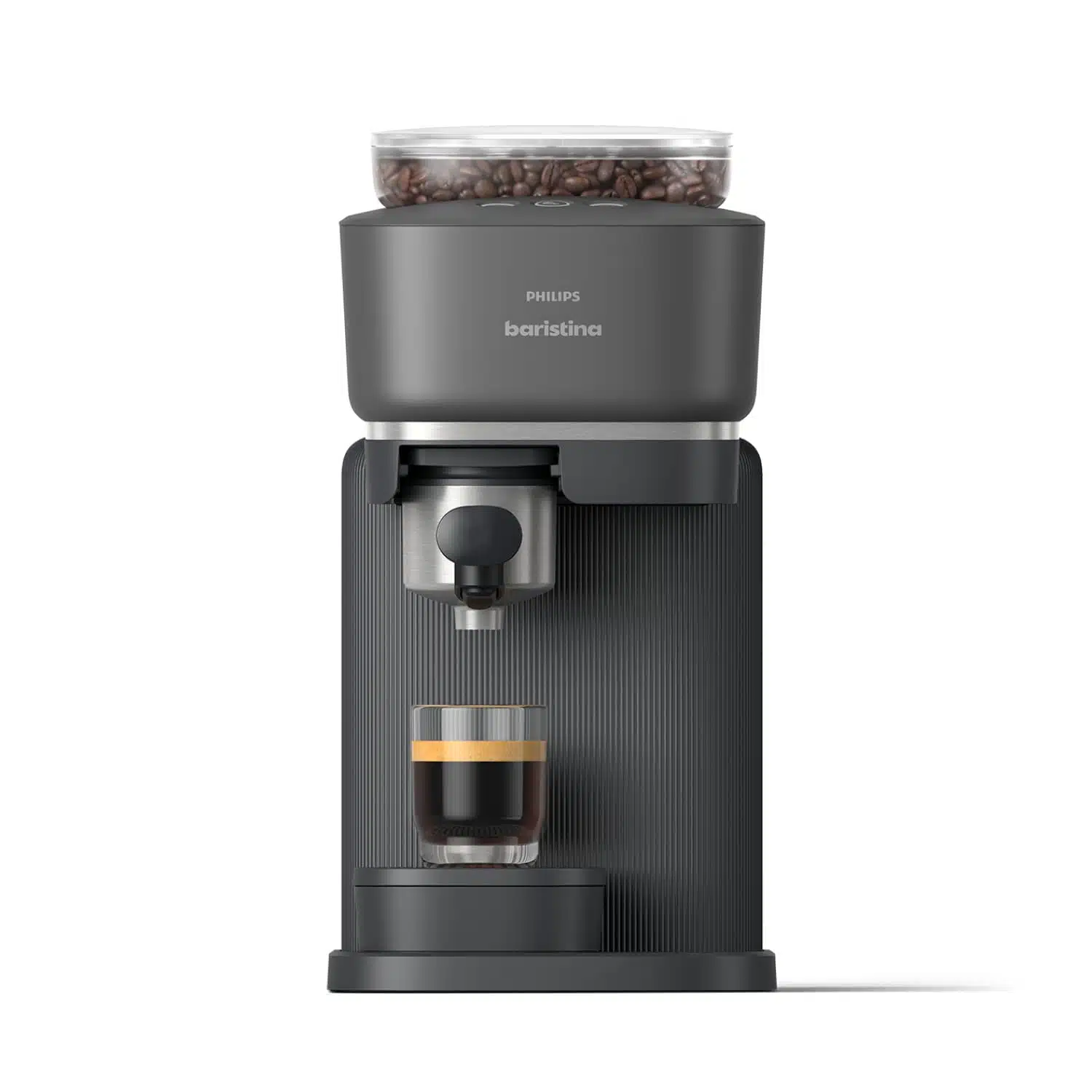
Overview Of The Philips Baristina Espresso Machine
Philips built this under the BAR300/60 model number. It’s got an integrated grinder and a portafilter-style brewing system.
You use whole coffee beans, so your coffee’s fresher and there’s less waste compared to pods.
Key specs:
| Feature | Detail |
|---|---|
| Pump Pressure | 16 bar |
| Water Tank Capacity | 1.2 litres |
| Weight | 5 kg |
| Dimensions (D x W x H) | 38 x 18 x 34.5 cm |
| Power | 1550 W, 240 V |
| Colour | Black with black portafilter |
| Operation | Fully automatic |
The machine makes espresso and lungo. If you want cappuccinos or lattes, you’ll need to get a separate milk frother—Philips sells one, but it’s not included.
Inside the box, you’ll find the machine and a user manual. That’s it. No extra bits or fancy accessories.
One-Swipe Grind, Tamp And Brew Simplicity
The swipe-to-brew feature is the star here. Just pour beans into the hopper, put your cup underneath, and swipe the handle.
The Baristina grinds, tamps, and brews the shot without you needing to fiddle with anything. No more guessing at grind size or tamping pressure.
Honestly, it feels a lot more like using a pod machine than wrangling a manual espresso setup.
There aren’t any confusing menus or screens. Just buttons. From a cold start, you’ll have espresso in about a minute once it’s heated up. It’s quick enough for even the most rushed mornings.
16-Bar Pressure And Espresso Quality
The 16-bar pump gives you plenty of pressure to pull flavour out of fresh beans. That’s about what you’d expect from a decent mid-range espresso machine.
The taste? Definitely a step up from pod machines. You’ll see a nice crema if you use good beans, and the flavour’s got more depth than you’d get from pre-ground stuff.
But here’s the catch: you don’t get the same level of control over grind size as you would with a separate burr grinder and a manual setup. If you’re already deep into espresso nerd territory and want to tweak every variable, this machine probably isn’t for you. It’s aimed at people who want decent, repeatable results without a lot of fuss.
Compact Design For Smaller Kitchens
The Baristina is just 18 cm wide, so it barely takes up any counter space. If you’re in a flat or have a tiny kitchen, that’s a big plus compared to other bean-to-cup machines (some of those are monsters—25 cm or more wide).
It’s 38 cm deep and 34.5 cm tall, but still easy to fit under most cupboards. At 5 kg, you can move it around pretty easily for cleaning or storage.
The all-black look is understated and modern. It won’t scream for attention in the kitchen, which I like. Philips used a mix of stainless steel and plastic, so it feels solid enough but not too heavy.
Cleaning And Day-To-Day Ease
Cleaning is straightforward. Just pop out the portafilter and rinse it under the tap. That’s it—no weird compartments or tricky parts to deal with every time you make coffee.
It’s not dishwasher safe, so you’ll need to wash everything by hand. The 1.2-litre water tank means you can make a few espressos before refilling.
One thing to remember: descaling is a must, just like any other espresso machine. How often depends on your water, but Philips gives you instructions in the manual.
Used coffee grounds? Toss them in the compost or food waste. No plastic pods or paper filters piling up—definitely a win for the environment.
Pros And Cons
Pros
- Super simple bean-to-cup process—just swipe and go
- Small footprint fits even cramped kitchens
- 16-bar pump makes legit crema and solid espresso
- No capsule waste, only coffee grounds
- Daily cleaning is quick with the removable portafilter
- Only 5 kg, so you can move it around easily
- Espresso coffee is a great addition to making cakes (coffee and walnut cake)
Cons – very minimal
- No built-in milk frother, but there is an optional to add this.
- Not much control over grind or brew settings for coffee geeks but in my opinion you don’t need this.
- Some people have had portafilter and water flow issues after a few months
- No extras in the box—just the manual
- Hand wash only, no dishwasher option
Customer Reviews
People who own the Baristina seem to have mixed feelings, but there’s some useful feedback out there. Loads of folks love how easy it is and say the espresso tastes great, especially compared to pods. Several mention how much they appreciate not having to throw away capsules—less waste is always a plus.
If you live alone or you’re the only coffee drinker at home, this machine might be perfect. It’s quick, and you don’t have to mess around with extra steps.
But, it’s not all sunshine. Some reviews mention problems with the portafilter after a few months—stuff like water leaking or getting stuck in the filter. I’ve had no problems with mine and we use ours several times a day.
Frequently Asked Questions
Is the Philips Baristina suitable for beginners who want café-style coffee at home?
Yep, it’s probably one of the easiest bean-to-cup espresso machines out there. It does the grinding, tamping, and brewing for you. Just add beans, swipe the handle, and you’re set—no barista skills needed.
How do you set up and use the Philips Baristina for the first time?
Setup’s simple. Fill the 1.2-litre water tank, add beans to the hopper, and run an initial cycle to get things primed. After that, just put your cup in place and swipe the handle to start brewing. Couldn’t really be easier.
How does the Philips Baristina compare with Nespresso for taste, cost, and convenience?
The Baristina uses fresh beans, so your espresso’s richer and more aromatic than what you’ll get from capsules. Over time, you’ll probably spend less too, since beans are cheaper per cup than branded pods. Convenience is similar, though you do need to rinse the portafilter each time instead of just chucking out a pod.
What drinks can you make with the Philips Baristina, and does it support milk-based coffees?
It pulls espresso and lungo. For milk-based drinks like cappuccinos and lattes, you’ll need a separate milk frother—Philips sells one, but it’s not built in. There’s no steam wand or milk system on the machine itself.
How easy is the Philips Baristina to clean and maintain, and what routine care is required?
Daily cleaning is just rinsing the portafilter under the tap. You’ll need to descale it now and then, depending on your water, and the manual explains how. Coffee grounds can go straight into the compost.
Is the Philips Baristina Premium or Baristina Plus worth the extra cost compared with the standard model?
The standard BAR300/60 model really nails the basics—you get solid grind, tamp, and brew functions. Higher-tier Baristina models throw in some extra drink options, more adjustable settings, and sometimes a few handy accessories.
Is it worth spending more? That honestly comes down to how much control you want over your coffee and if you care about having a built-in milk solution. If you’re happy with the essentials, the regular model probably does the trick and I am very happy with mine 😉 Try the Philips Baristina Espresso Machine for yourself.